
The website contains cookies
By continuing to read, you accept that our website uses cookies to enhance your user experience.
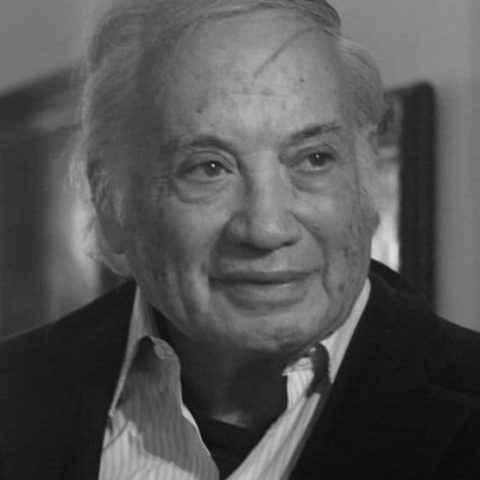
Tomaso Kemeny is an outstanding figure in contemporary Italian poetry, with half a century of work as a poet, literary historian and literary translator. He has published dozens of books, and his work is diverse yet coherent: in addition to his knowledge of Italian and Anglo-Saxon (especially British) poetry, he has contributed to the shaping of international literary life with his works in the fields of aesthetics and literary criticism. He has been an acknowledged interpreter of Hungarian poetry in Italian literature: his translations of Attila József and Ady opened a new path in the reception of Hungarian poetry in Italy, but he has also made many other Hungarian poets, especially 20th century and contemporary ones, popular in Italy.
As an English scholar, he headed the English Department at the University of Pavia for decades, his publications in English studies focused on Romanticism, and as a literary translator he is credited with the publication of Byron’s selected works, among others.
Since Kemeny was born in Hungary and was already ten years old when he had to leave his homeland with his parents, the effects of his socialisation and acculturation in Italy were initially felt in his poetic language and in his mythicisation of the Danube. As his life’s work developed, however, this took on an increasingly conscious form: in a large-scale programme of poetic reclamation of the lost Hungarian identity, exemplified by his great opus “La Transilvania liberata” (2005) and his long poem “Scintilla d’oro a Castiglione Olona” (2005). The recuperation is not primarily thematic – the Hungarian thematic layers are part of a complex network of Italian, European and universal elements – but rather linguistic-structural in the poetic imagination.
Endre Szkárosi
By continuing to read, you accept that our website uses cookies to enhance your user experience.